

As an Amazon Associate, brabible.com earns from qualifying purchases. Some links below are affiliate links, at no extra cost to you.
If you count down the minutes until you can take your bra off, the bra is rarely the problem. The fit is. Studies have found that roughly a third to a half of women are wearing the wrong size, and most who get measured properly end up in a size they would never have guessed. The good news: fixing it takes about five minutes and a tape measure.
This is the only bra fitting guide you’ll need. It walks you through measuring at home, an instant size calculator, why the band matters more than the cup, how sister sizing rescues a near-miss fit, international size conversions, the seven signs your bra is fighting you, and the fitting myths worth forgetting. Work through it top to bottom, or jump to what you need:
- How to measure your bra size at home
- Instant bra size calculator
- Band vs cup: which matters more
- Sister sizing explained
- US vs UK vs EU conversion chart
- 7 signs your bra doesn’t fit
- Bra myths, debunked
- FAQ
How to Measure Your Bra Size at Home
All you need is a soft tape measure and a mirror. Wear an unpadded bra, or none at all, for the most honest reading. Keep the tape snug and level, not tight enough to bite.
Step 1: Measure your band (underbust)
Wrap the tape around your ribcage directly under your bust, where the band of the bra sits. Pull it firm and level all the way around, then breathe out and take the number in inches. This is your band measurement. If you land on an odd number, most fitters round to the nearest even number; if you’re between sizes, try both.
Step 2: Measure your bust
Now measure around the fullest part of your bust, usually across the nipple line, keeping the tape loose enough to stay level without compressing anything. Stand relaxed with arms down. This is your bust measurement.
Step 3: Work out your cup
Subtract your band number from your bust number. Each inch of difference is one cup size: 1 inch is an A, 2 inches a B, 3 a C, 4 a D, 5 a DD, and up from there. So a 34-inch band with a 37-inch bust is a 3-inch difference, which is a 34C. Not sure you got it right? The calculator below does the math for you, sister sizes included.
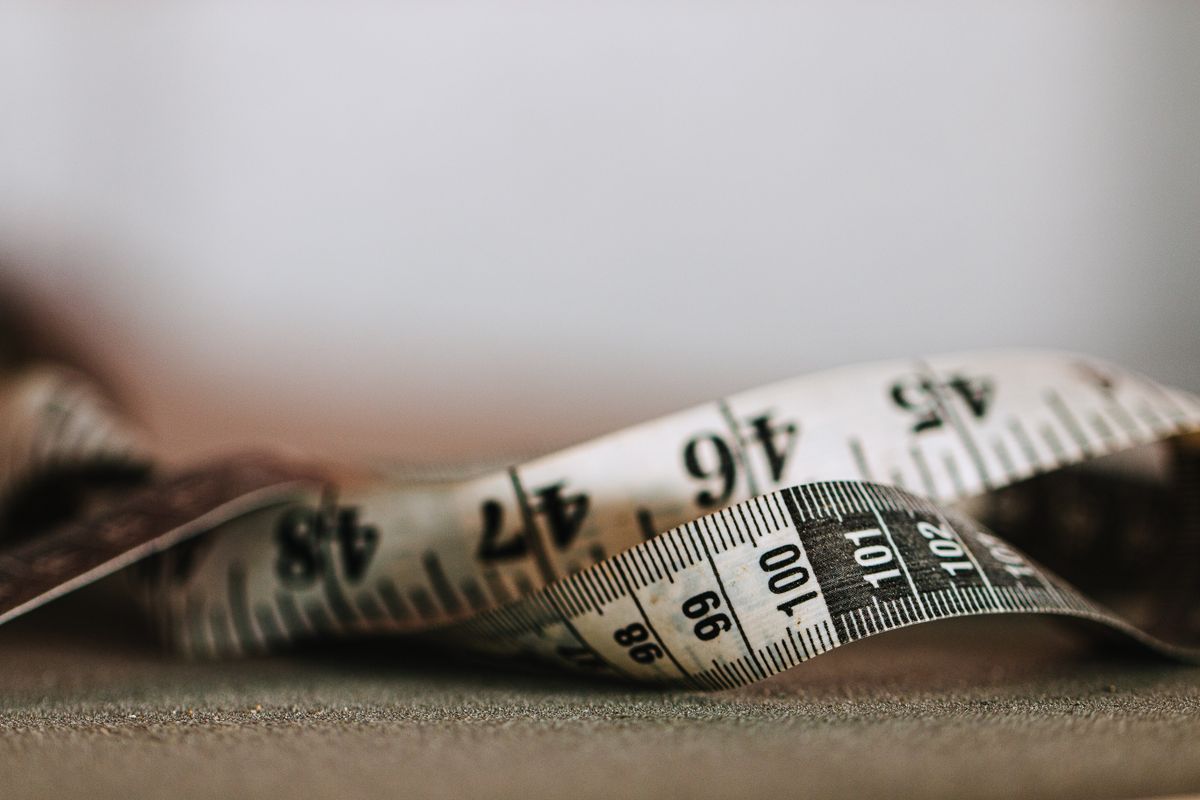
A basic soft tape measure is all the kit you need, and it’s worth owning one for exactly this.
Instant Bra Size Calculator
Enter your two measurements and get your estimated size in seconds, with sister sizes to fine-tune. No sign-up, no math on your end.
Bra Size Calculator
Enter two measurements and get your size instantly.
Band vs Cup: Which Actually Matters More?
Here’s the truth that turns bra shopping from guesswork into a system: the band matters more than the cup. Cup size gets all the attention, but the band does about 70 to 80 percent of the actual lifting. The cups only hold and shape the tissue; the band anchors everything to your ribcage and carries the weight. Straps are for fine-tuning, not support.
Once that clicks, a lot of problems solve themselves. If your bra is riding up your back, digging in, or slipping off your shoulders, the band is almost always the culprit, not the cup. A firm, level band that stays put is the single biggest driver of an all-day-comfortable bra. When you try one on, the band should sit horizontal around your body, and you should be able to fit two fingers under it, no more.
Sister Sizing: The Trick That Rescues Any Bra
Sister sizing might be the most useful fitting move you’ve never heard of. Every bra size has neighbours that hold the same cup volume on a different band. So when your usual size is sold out or feels slightly off, you can slide to a sister size and rescue the fit instead of giving up.
The logic: cup volume is tied to the band. Go down a band and up a cup letter (or up a band and down a letter) and the actual cup capacity stays the same. That means a 34C, a 32D, and a 36B all share roughly the same cup volume, they just sit on different ribcage sizes. If a 34C band feels loose, try its sister 32D: smaller, firmer band, same cups. If the band digs, go the other way to a 36B.
- Band too loose? Go down a band, up a cup (34C to 32D).
- Band too tight? Go up a band, down a cup (34C to 36B).
- Cups fine, band wrong? Sister sizing keeps the cup volume while you fix the band.
US vs UK vs EU Bra Size Conversion Chart
A 34D isn’t a 34D everywhere. Shop across borders and the same bra can carry three different labels, which is how people end up with a drawer full of near-misses. US and UK bands use the same inch numbers, but the cup letters split once you pass a D, and Europe switches to centimetres entirely. Use the charts below to shop US, UK, European, French and Australian brands with confidence.
Band size conversion
| System | Band Sizing | Cup Progression | Best For |
|---|---|---|---|
| US | Even numbers (32, 34, 36) | A, B, C, D, DD, DDD, G | American brands |
| UK | Even numbers (32, 34, 36) | A, B, C, D, DD, E, F, FF, G | British brands (more consistent for larger cups) |
| EU | Centimeters (70, 75, 80) | A, B, C, D, E, F, G | European brands |
Cup size conversion
| US Size | UK Size | EU Size | FR/BE Size | AUS/NZ Size |
|---|---|---|---|---|
| 28A | 28A | 60A | 75A | 6A |
| 30A | 30A | 65A | 80A | 8A |
| 32A | 32A | 70A | 85A | 10A |
| 34A | 34A | 75A | 90A | 12A |
| 36A | 36A | 80A | 95A | 14A |
| 32B | 32B | 70B | 85B | 10B |
| 34B | 34B | 75B | 90B | 12B |
| 36B | 36B | 80B | 95B | 14B |
| 32C | 32C | 70C | 85C | 10C |
| 34C | 34C | 75C | 90C | 12C |
| 36C | 36C | 80C | 95C | 14C |
| 32D | 32D | 70D | 85D | 10D |
| 34D | 34D | 75D | 90D | 12D |
| 36D | 36D | 80D | 95D | 14D |
| 32DD | 32DD | 70E | 85E | 10DD |
| 34DD | 34DD | 75E | 90E | 12DD |
| 32DDD/F | 32E | 70F | 85F | 10E |
| 34DDD/F | 34E | 75F | 90F | 12E |
| 32G | 32F | 70G | 85G | 10F |
| 34G | 34F | 75G | 90G | 12F |
7 Signs Your Bra Doesn’t Fit (and How to Fix Each)
Most bras that feel uncomfortable aren’t broken, they just don’t fit. And discomfort is diagnostic: each ache or gap points to a specific fix.
- The band rides up at the back. The band is too big. Go down one band size and up one cup to keep the volume (sister sizing). The band should sit level with the front.
- The underwire digs or sits on breast tissue. The cup is too small, so the wire can’t sit flat against your ribs. Go up a cup size until the wire rests on the bone, not the breast.
- Cups gape or wrinkle. The cup is too big, or the style is wrong for your shape. Try a cup down, or a more fitted style like a moulded or plunge cup.
- You spill over the top or sides. Classic too-small cup (quad-boob). Go up a cup, and consider a fuller-coverage style.
- Straps dig into your shoulders. The band isn’t pulling its weight, so the straps overcompensate. Tighten the band fit first (usually down a band size); straps should carry very little load.
- Straps slip off constantly. Often a band that’s too loose, or straps set too wide for your frame. Fix the band, adjust the straps, or choose a leotard-back style.
- The centre gore doesn’t lie flat. The gore (the bit between the cups) should tack flat against your sternum. If it floats, the cup is usually too small.
Bra Myths, Debunked
- Myth: Underwire bras are bad for your health. False. There’s no credible evidence that underwire causes any disease. If a wire hurts, that’s a fit problem, not a health hazard, fix the size.
- Myth: You should measure your cup over a bra for ‘accuracy’. Measure snug and honest. Adding padding to the measurement just inflates the number and lands you in the wrong cup.
- Myth: Your size never changes. Weight, hormones, pregnancy and even a new brand can shift your size. Re-measure a couple of times a year, and whenever a favourite bra stops feeling right.
- Myth: A tighter band means more support done wrong. A firm band supports; a painful one doesn’t. Two fingers should slide under it. Support comes from the right size, not from strangling your ribs.
- Myth: Sizing is standard across brands. It isn’t. Cut, stretch and cup depth vary brand to brand, which is exactly why trying on and sister sizing matter.
Frequently Asked Questions
How do I measure my bra size at home?
Measure your underbust snugly in inches for the band, then measure around the fullest part of your bust. Subtract the band number from the bust number: each inch of difference is one cup size (1=A, 2=B, 3=C, 4=D, 5=DD).
Is band or cup size more important?
The band. It provides about 70 to 80 percent of a bra’s support by anchoring to your ribcage. A firm, level band is the biggest factor in an all-day-comfortable, supportive fit.
What is sister sizing?
Sister sizes share the same cup volume on a different band. Going down a band and up a cup (or vice versa) keeps the cup capacity the same, so a 34C, 32D and 36B hold roughly the same volume.
Why is my US bra size different in the UK or EU?
US and UK bands use the same inches, but cup letters diverge past a D, and the EU uses centimetres. Always convert your size when buying from international brands.
How often should I re-measure?
Every six to twelve months, and any time your weight changes, after pregnancy, or when a bra that used to fit suddenly doesn’t.
About the author
Sarah Mitchell is brabible.com’s resident bra-fit writer. She has spent years testing and researching bras across brands and body types, translating professional fitting-room know-how into plain, practical advice. Her goal is simple: help every reader find a bra they forget they’re wearing.