Fit & Sizing
The Complete Bra Fitting & Sizing Guide: Measure, Convert & Fix Your Fit
If you count down the minutes until you can take your bra off, the bra is rarely the problem. The fit is. Studies have found that roughly a third to a half of women are wearing the wrong size, and most who get measured properly end up in a size they would never have guessed. The good news: fixing it takes about five minutes and a tape measure.
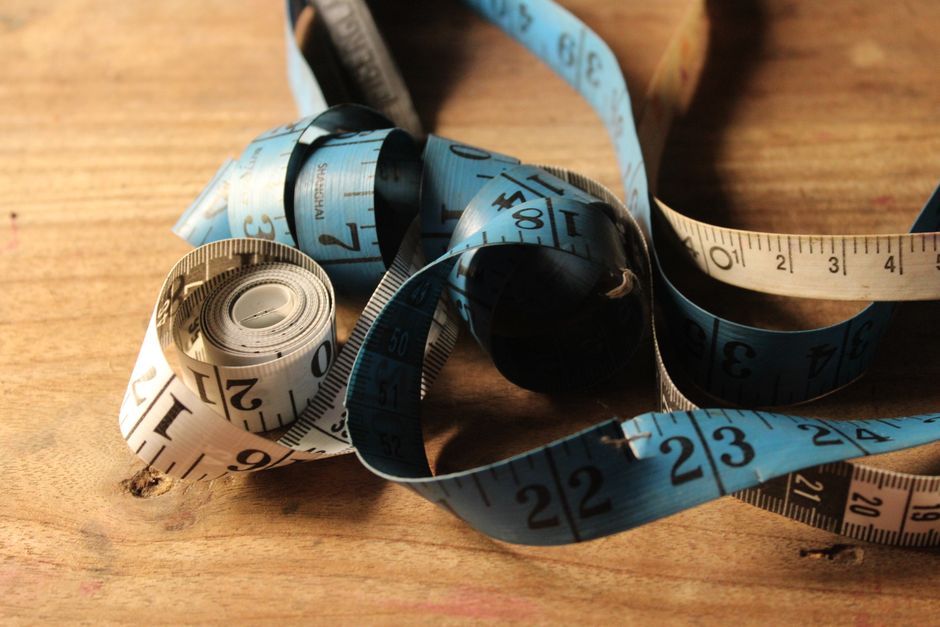
How to Measure Your Bra Size at Home
All you need is a soft tape measure and a mirror. Wear an unpadded bra, or none at all, for the most honest reading. Keep the tape snug and level, not tight enough to bite.
Step 1: Measure your band (underbust)
Wrap the tape around your ribcage directly under your bust, where the band of the bra sits. Pull it firm and level all the way around, then breathe out and take the number in inches. This is your band measurement. If you land on an odd number, most fitters round to the nearest even number; if you’re between sizes, try both.
Step 2: Measure your bust
Now measure around the fullest part of your bust, usually across the nipple line, keeping the tape loose enough to stay level without compressing anything. Stand relaxed with arms down. This is your bust measurement.
Step 3: Work out your cup
Subtract your band number from your bust number. Each inch of difference is one cup size: 1 inch is an A, 2 inches a B, 3 inches a C, 4 inches a D, 5 inches a DD, and up from there. So a 34-inch band with a 37-inch bust is a 3-inch difference, which is a 34C. Not sure you got it right? The calculator below does the math for you, sister sizes included.
If you’d rather not measure yourself, a soft tape measure is the whole kit — one costs a couple of dollars and lasts for years.
Band vs Cup: Which Actually Matters More?
Here’s the truth that turns bra shopping from guesswork into a system: the band matters more than the cup. Cup size gets all the attention, but the band does about 70 to 80 percent of the actual lifting. The cups only hold and shape the tissue; the band anchors everything to your ribcage and carries the weight. Straps are for fine-tuning, not support. Once that clicks, a lot of problems solve themselves.
If your bra is riding up your back, digging in, or slipping off your shoulders, the band is almost always the culprit, not the cup. A firm, level band that stays put is the single biggest driver of an all-day-comfortable bra. When you try one on, the band should sit horizontal around your body, and you should be able to fit two fingers under it, no more.
Support lives in the band, so it’s worth buying for it: bras with a wide, cushioned band hold their shape far longer than flimsy ones.
Sister Sizing: The Trick That Rescues Any Bra
Sister sizing might be the most useful fitting move you’ve never heard of. Every bra size has neighbours that hold the same cup volume on a different band. So when your usual size is sold out or feels slightly off, you can slide to a sister size and rescue the fit instead of giving up.
The logic: cup volume is tied to the band. Go down a band and up a cup letter (or up a band and down a letter) and the actual cup capacity stays the same. That means a 34C, a 32D, and a 36B all share roughly the same cup volume — they just sit on different ribcage sizes.
- Band feels loose on a 34C? Try its sister 32D: smaller, firmer band, same cups.
- Band digs in on a 34C? Go the other way to a 36B.
- Between two sizes? Buy the smaller band with the larger cup — the band is what carries the weight, and most bands stretch with wear.
| Your size | Sister (firmer band) | Sister (roomier band) |
|---|---|---|
| 32C | 30D | 34B |
| 34C | 32D | 36B |
| 36D | 34DD | 38C |
| 38DD | 36DDD | 40D |
US vs UK vs EU Bra Size Conversion Chart
A 34D isn’t a 34D everywhere. Shop across borders and the same bra can carry three different labels, which is how people end up with a drawer full of near-misses. US and UK bands use the same inch numbers, but the cup letters split once you pass a D, and Europe switches to centimetres entirely. Use the charts below to shop US, UK, European, French and Australian brands with confidence.
| System | Band sizing | Cup progression | Best for |
|---|---|---|---|
| US | Even numbers (32, 34, 36) | A, B, C, D, DD, DDD, G | American brands |
| UK | Even numbers (32, 34, 36) | A, B, C, D, DD, E, F, FF, G | British brands (more consistent for larger cups) |
| EU | Centimetres (70, 75, 80) | A, B, C, D, E, F, G | European brands |
| FR/ES/BE | Centimetres (85, 90, 95) | Same letters as EU | French, Spanish and Belgian brands |
| AUS/NZ | Even numbers (10, 12, 14) | A, B, C, D, DD, E, F | Australian and New Zealand brands |
Band conversion at a glance
| US / UK band | EU | FR / ES / BE | AUS / NZ |
|---|---|---|---|
| 30 | 65 | 80 | 8 |
| 32 | 70 | 85 | 10 |
| 34 | 75 | 90 | 12 |
| 36 | 80 | 95 | 14 |
| 38 | 85 | 100 | 16 |
| 40 | 90 | 105 | 18 |
On cups, the split that trips people up is US DDD = UK E, and US G = UK F. If you wear a large cup, UK sizing is the one to trust: the letters escalate more gradually, so you land on a truer fit.
7 Signs Your Bra Doesn’t Fit (and How to Fix Each)
Most bras that feel uncomfortable aren’t broken, they just don’t fit. And discomfort is diagnostic: each ache or gap points to a specific fix.
- The band rides up at the back. It’s too big. Go down one band size and up one cup. The band should sit level with the floor all the way around.
- The band digs in and leaves marks. Too tight — or the cups are too small and the band is compensating. Check the cup first, then go up a band.
- Straps fall off your shoulders. A band problem, not a strap problem. Tighten the band fit (often by going down a band), then loosen the straps.
- The centre gore floats away from your chest. The cups are too small or too shallow. Go up a cup, or switch to a style with a lower, deeper gore.
- Spillage over the top of the cups. Classic too-small cup. Go up one cup size; if the band then feels loose, take a sister size down.
- Wrinkled, empty cup fabric. The cup is too big, or the style is too shallow for your shape. Try a smaller cup or a different cut.
- Underwires poke or sit on tissue. The wire is too narrow or the cup too small. Look for wider wires and full-coverage cups.
Fixing two of these usually means replacing one or two bras rather than the whole drawer. If the band is the issue, a well-made everyday bra with three hook rows will outlast three cheap ones.
Bra Myths, Debunked
- “A new bra should fit on the loosest hook.” True, and that’s the point: bands stretch, so buy the band firm on the loosest hook and tighten inward as it ages.
- “Your cup size is fixed.” It isn’t. Cup volume shifts with weight, hormones and brand. Re-measure every six months or whenever a bra starts feeling wrong.
- “Padding adds a size.” Padding changes the shape the cups hold, not your measured size. Always measure unpadded.
- “One size up always solves a tight bra.” Usually the band, not the cup, is the problem — and going up a band without adjusting the cup just moves the issue.